

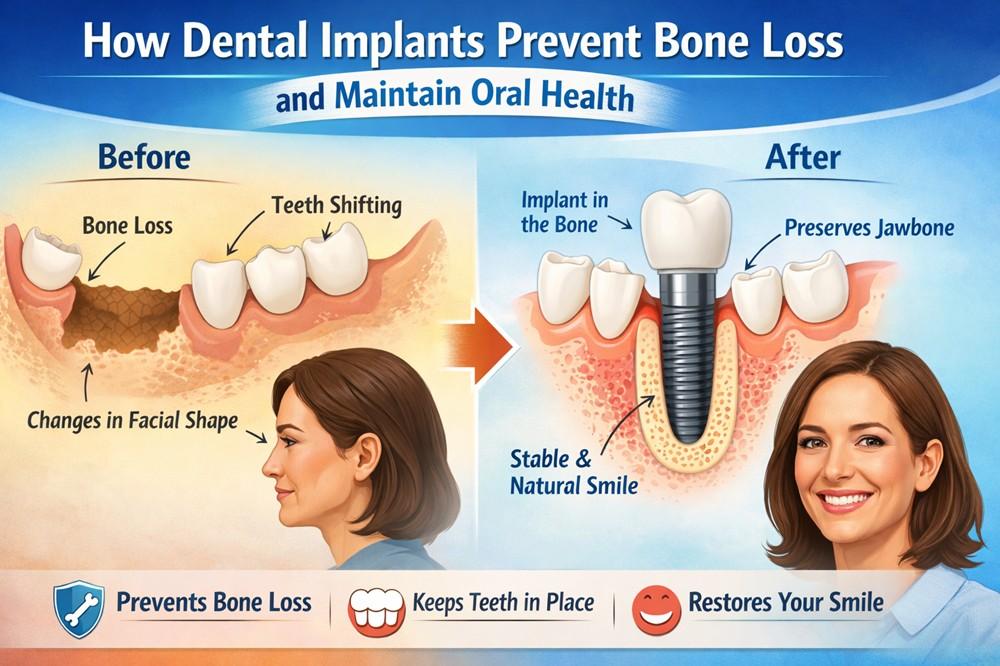
Losing a tooth affects more than your smile. It can change how your mouth works and weaken your jaw over time. Missing teeth may lead to bone loss, tooth shifting, and difficulty eating or speaking. Over time, these changes can also affect your bite and the natural shape of your face. Single-tooth implants help replace a missing tooth while supporting the jaw and maintaining balance in your smile.
This blog explains how dental implants help prevent these problems and support long-term oral health.
What Happens to Your Jawbone After Tooth Loss?
When a tooth is lost, the jawbone in that area no longer gets the pressure it needs from chewing. This pressure is significant because it signals the body to maintain bone strength. Without it, the bone slowly starts to shrink.
Here is what can happen after tooth loss:
- The jawbone becomes thinner and weaker.
- Nearby teeth may shift into space.
- Your bite can change over time.
- The shape of your face may look sunken.
- Chewing may feel uneven or uncomfortable.
Replacing a missing tooth early helps prevent these changes. Some tooth replacement options are designed to fill the gap while also supporting the bone underneath.
How Do Dental Implants Help Prevent Bone Loss?
Dental implants function like the roots of natural teeth. They are placed into the jawbone, where they bond with the bone over time. This bonding process helps keep the bone active and strong.
With Dental implants in SW Calgary, patients benefit from a solution that supports both function and structure. Unlike removable options, implants stay in place and send regular pressure to the jaw when you chew. It helps slow down bone loss and keeps the jaw healthy.
Key ways implants support bone health include:
- Replacing the missing tooth root.
- Keeping the chewing pressure evenly spread.
- Reducing stress on nearby teeth.
- Supporting the natural shape of the jaw.
Why Is Bone Health Important for Overall Oral Health?
Your jawbone supports your teeth, gums, and facial shape. When bone loss occurs, it can lead to other oral health problems. Weak bone makes it harder to keep remaining teeth stable and can increase the risk of gum issues.
Visiting a trusted dental clinic in SW Calgary helps ensure that bone health is checked as part of routine care. Dentists look at how missing teeth affect your bite and bone structure, not just your smile.
Good bone health supports:
- Strong, stable teeth.
- Healthy gums.
- Clear speech.
- Comfortable chewing.
- Balanced facial features.
How Do Dental Implants Compare to Other Tooth Replacement Options?
Not all tooth replacements work the same way. Some options focus only on appearance, while others support long-term oral health.
| Feature | Dental Implants | Bridges | Dentures |
| Replace the tooth root | Yes | No | No |
| Help prevent bone loss | Yes | No | No |
| Fixed in place | Yes | Yes | No |
| Affect nearby teeth | No | Yes | Sometimes |
| Long-term stability | Strong | Moderate | Varies |
This comparison shows why implants are often chosen for maintaining jawbone health and overall balance in the mouth.
Can Dental Implants Improve Daily Comfort and Confidence?
Yes. Dental implants are designed to feel and function like natural teeth. Because they stay firmly in place, they allow people to eat, speak, and smile with ease.
Benefits patients often notice include:
- Better chewing power.
- Clearer speech.
- No slipping or movement.
- Easier oral care.
- More confidence in social settings.
When you choose care from a dentist near you, you can discuss how implants fit into your daily life and long-term health goals.
Who Can Benefit from Dental Implants?
Implants can be highly beneficial for many adults with missing teeth. They are usually recommended for individuals who:
- Have missing teeth.
- Desire a fixed tooth replacement.
- Have healthy gums.
- Are you looking to protect jawbone health?
- Prefer a long-term solution.
A dental evaluation helps determine if implants are the right choice based on bone level and overall oral health.
How Long Do Dental Implants Last?
Dental implants are built to last many years with proper care. Good brushing, flossing, and regular dental visits help keep the gums and bone around the implant healthy.
Tips for implant care include:
- Brushing twice daily.
- Flossing around the implant.
- Avoiding hard habits like chewing ice.
- Attending routine dental check-ups.
With proper care, implants can be a strong part of your smile for a long time.
Restore Your Smile with Atlas Dental Centre
Missing teeth do not have to result in bone loss or a change in your smile. Dental implants are a great way to ensure the health of your jawbone. At Atlas Dental Centre, the focus is on providing straightforward advice, planning, and patient care. If you are ready to think about a solution that will support your smile and oral health in the future, book a consultation today and take the first step towards a stronger, healthier smile.
FAQs:
How soon should a missing tooth be replaced?
It is helpful to replace a missing tooth as early as possible to reduce the risk of bone loss and tooth shifting.
Do dental implants feel like natural teeth?
Yes, they are designed to feel stable and comfortable, similar to natural teeth during daily activities.
Can bone loss be prevented after tooth loss?
Yes, replacing the tooth and restoring chewing pressure can help slow down or prevent bone loss.
Is caring for dental implants difficult?
No, they can be cared for with regular brushing, flossing, and routine dental visits.